
How ChatGPT Is Transforming E-Commerce & Online Shopping
E-commerce is entering a new phase, and it’s not happening on Google, Amazon, or social media.
With the launch of ChatGPT Shopping, online shopping is shifting toward conversational commerce, where users can search, compare, and even buy products directly inside ChatGPT. This marks a major change in how purchase decisions are made and where brand visibility truly matters.
From Search Engines to Conversations
Traditionally, the online shopping journey followed the same steps: search, click, compare, scroll, repeat. ChatGPT Shopping shortens that process dramatically.
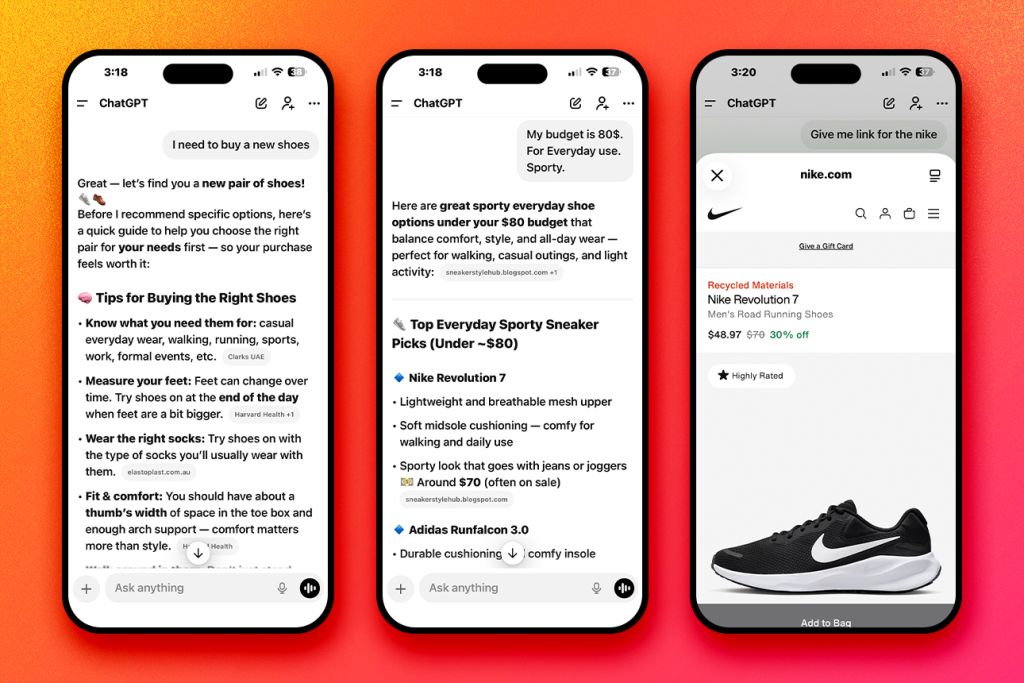
Instead of typing keywords, users can now ask direct questions:
“Which coffee machine would you recommend for under $100?”
“Show me trendy white sneakers.”
ChatGPT responds with a selected set of products, complete with images, prices, customer reviews, and technical details. In some cases, products are even labeled with indicators like “Popular” or “Best value for money”.
The result is a smoother, faster, and more human shopping experience.
A Recommendation Engine Built on Intent
What makes ChatGPT Shopping different from traditional search is how results are selected.
Rather than ranking products based on paid placements, ChatGPT relies on real-time analysis of purchase intent. It evaluates the user’s question, context from previous interactions, product relevance, popularity, and the quality of merchant data. The goal isn’t to sell harder, but to recommend better.
For now, most purchases still redirect users to merchant websites. But that’s quickly changing.
From Discovery to Checkout: Without Leaving ChatGPT
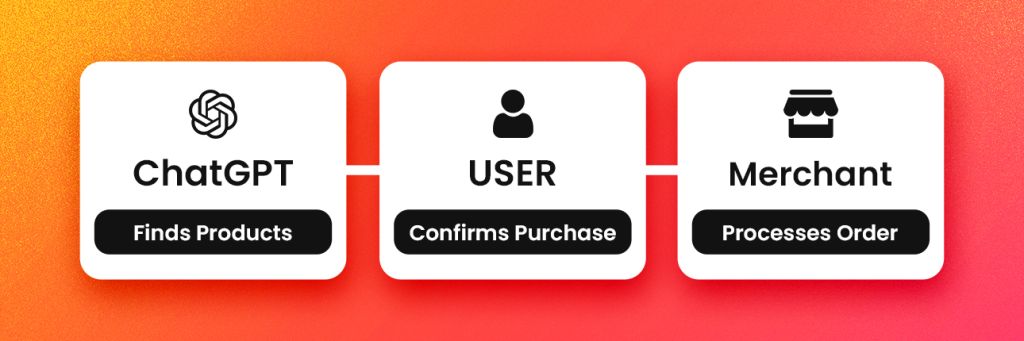
Through beta integrations with Shopify’s payment system, ChatGPT can now handle the entire shopping journey, from product discovery to checkout, directly inside the conversation. This capability was further reinforced with the launch of Instant Checkout, powered by Stripe’s Agentic Commerce Protocol.
This new standard allows AI agents, users, and merchants to interact securely while giving brands full control over payments, orders, and customer relationships.
For users, it means fewer steps and zero friction.
For merchants, it means access to millions of highly intent-driven shoppers without changing their backend systems.
This is the beginning of agentic commerce, where AI doesn’t just assist shopping decisions, but actively processes them.
Why This Shift Matters for Brands and Retailers
The most uncontrollable part of ChatGPT Shopping isn’t the technology itself, but its visibility.
Unlike traditional platforms, ChatGPT Shopping doesn’t currently rely on sponsored results. Products are surfaced based on relevance, reviews, availability, and the overall quality of product data. That means brands can’t simply buy their way to the top.
To be recommended, products must be understandable, credible, and useful in a conversational setting.
GEO: The New SEO for AI Shopping
This shift has given rise to Generative Engine Optimization (GEO), a new approach to visibility designed specifically for AI-driven platforms.
While SEO focuses on ranking pages in search engines, GEO focuses on making products easy for AI to interpret and confidently recommend. That includes:
- Clear, well-structured, conversational product descriptions
- Accurate and regularly updated pricing and availability
- Content that answers specific, real-world customer questions
- Strong reviews and clear unique selling points(USP)
If a product’s data is incomplete, outdated, or unclear, AI systems are far less likely to surface it.
In other words: if AI can’t explain your product, it won’t sell it.
The Bigger Impact on the E-Commerce Ecosystem
ChatGPT Shopping reflects a broader transformation in online commerce.
Instead of navigating multiple platforms like search engines, comparison sites, marketplaces,users receive a single, combined answer tailored to their needs. This could significantly reduce reliance on traditional marketing channels like Google Shopping or even large marketplaces.
As shopping journeys become shorter and more conversational, brands must rethink how they capture demand. Visibility will increasingly depend on being present inside AI-generated responses, not just on ranking pages or running ads.
Final Takeaway
ChatGPT Shopping is more than an innovation, it’s a signal that the future of e-commerce won’t just live on websites.
E-commerce is shifting toward intelligent, conversational decision-making, where trust, clarity, and relevance matter more than clicks. Brands that adapt early by optimising their product data and content for AI-driven shopping will gain a strong competitive edge.
Those that don’t, may find themselves slowly disappearing from the places where buying decisions are actually made.
Success will go to brands that make shopping easier, smarter, and more relevant.